

A skip lorry carrying a loaded skip through a city street
For waste carriers, brokers and dealers

One record per movement, made at the kerbside

Capture the load where the waste changes hands and have it signed before the van moves, then keep the record for as long as the law requires. Digital Waste Tracking asks that of every carrier, broker and dealer from October 2027.

Capture

Digital Waste Tracking capture, built for the mandate

Every field DEFRA's Digital Waste Tracking service requires, filled in on a phone at the kerbside rather than copied up from a pad that evening.

A work-gloved hand holding a phone at the kerbside

Structured waste records

Every field DEFRA requires for a waste movement: EWC codes (the six-digit European Waste Catalogue number that says what a waste is), physical form, container type, weight, hazardous properties, POPs flags, and the disposal or recovery code. Captured once as structured data on the phone, not scribbled on paper and keyed in later.

Checked as you go

Before a record is saved, the app checks it against the rules: missing EWC code, no carrier registration number without a reason, hazardous load without a consignment note code. Problems show up on screen while the driver is still at the kerbside, not in a rejection email three days later.

Offline-first capture

Rural tips, underground car parks, patchy 4G on an industrial estate: drivers can record a movement with no signal at all. The record queues on the device and syncs when the connection comes back, and the temporary number written on the customer's copy is reconciled with the real one afterwards. On the phone it runs as the mobile app, free on every plan, with nothing to download from an app store.

Signed on site, or after you've gone

Whoever hands the waste over signs on the screen with a finger before the van moves. When the person who has to sign isn't there, email them a single-use link and choose how hard the app chases it: not at all, one nudge on day three, or up to five over ten days. A half-signed note doesn't sit forgotten.

Photos of the load

Up to thirty photos on a movement, each with a caption, taken on the same phone that made the record. They queue offline like the record does, and print as an evidence sheet when a customer disputes what was on the van or a tip queries a load.

Fewer things to type twice

Save the people you collect from, your vehicles, and the sites you tip at, then pick them on the form instead of typing them out again. For a site you've never used, search the Environment Agency or Natural Resources Wales permit register from inside the form and take its name, address, and permit number straight off the register. Send work out to other hauliers and they get an address book of their own.

Season tickets, for the collection you make every week

One transfer note can cover repeat collections of the same waste from the same customer for up to twelve months, which is what the waste duty of care code of practice calls a season ticket. Every collection made under it is filed against the ticket, so a weekly round doesn't mean a fresh note every time. Hazardous waste is left out, because that needs a consignment note per load.

Records are built to DEFRA's standard and kept for as long as the law requires. See the key dates for exactly how it works, and when.

Do you take waste in as well?

Running a permitted site is a different job under the rules, and receiving sites are in scope a year before carriers are. What the mandate asks at the gate has a page of its own.

Hazardous waste

Hazardous loads go through the same flow

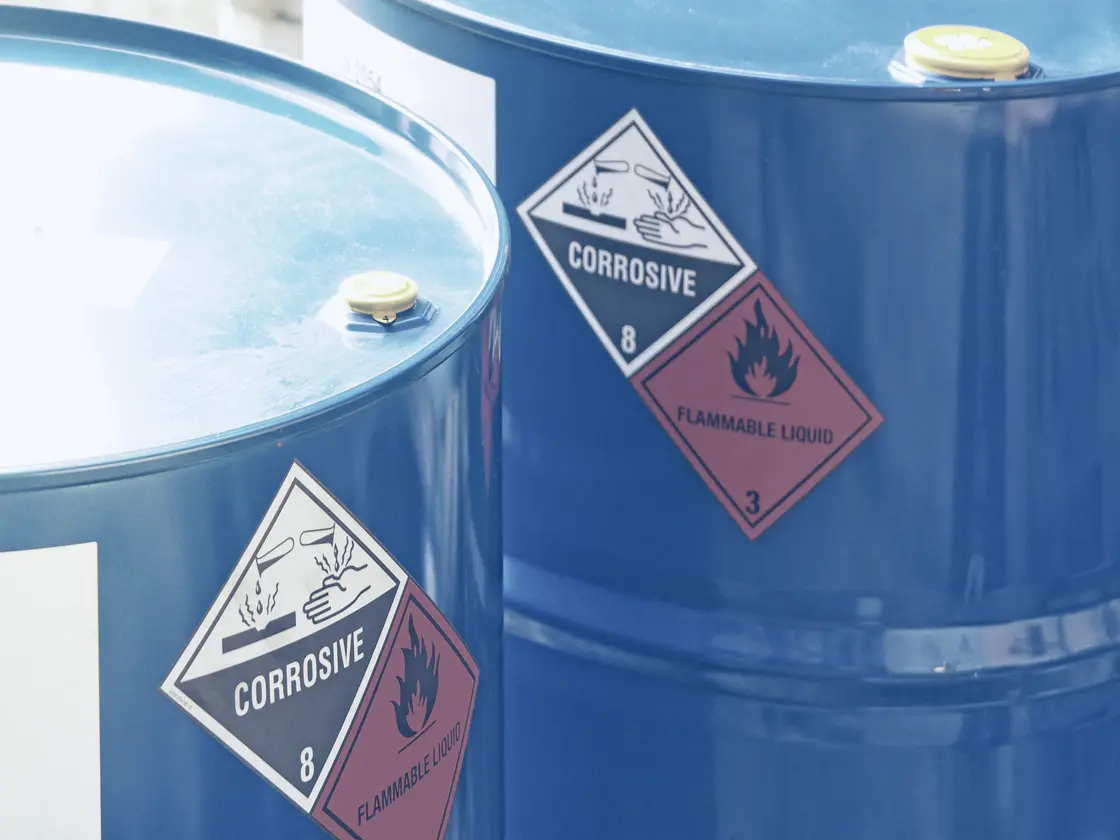
A hazardous load needs a consignment note as well as a transfer note, and it asks for details an ordinary transfer note never does. It's the same form, with the extra parts opened up.

Blue drums of hazardous waste, corrosive and flammable-liquid diamonds showing

Consignment notes and HP codes

A hazardous movement gets a consignment note with its own code, plus the HP codes (the hazard properties, such as flammable or corrosive) that say why the waste is hazardous. The note is produced as a PDF carrying the right legal basis for England and Wales, Scotland, or Northern Ireland, and is kept for three years, which is what a consignment note needs in all four nations.

POPs, recorded once

POPs are persistent organic pollutants, the harmful chemicals found in things like older sofas and some insulation board. Where they apply you record which ones and at what concentration on the same form as everything else, so a POPs load isn't a separate piece of paperwork someone has to remember.

What the site did with it

The site receiving a hazardous load records whether it accepted or rejected it, how much it actually took, and signs for it. That comes back onto your own copy of the consignment note, so the end of the chain is on the same record as the start.

Sending to DEFRA

Connected to Digital Waste Tracking

Receiving sites are mandated onto the service from October 2026 in England and Wales, and from January 2027 in Scotland and Northern Ireland. Carriers follow in October 2027.

On the GOV.UK list, connected to the service

CarrierNote is on the GOV.UK software provider list for Digital Waste Tracking and connected to the live service. A receiving site files its records through us today. Carrier movements follow the moment DEFRA opens that step, with nothing for you to install or set up when it happens.

Check it on the GOV.UK list of software providers, where we’re named as Red Tape Software Limited with Carriernote.co.uk as the product. What the listing means.

We publish how our software does on DEFRA’s test scenarios, including the two records it refuses on purpose.

The tracking ID lands on the record

DEFRA hands back a Waste Tracking ID when it takes a record, a unique reference for that movement. It's stored against the movement it belongs to, so the proof that a record was accepted sits with the paperwork rather than in somebody's inbox.

See what's ready before you send

Every movement carries a readiness state the office can see at a glance, so a record that's still missing a signature or a code is obvious before anyone tries to send it. The ones running out of time surface on the dashboard on their own.

A failed send is ours to chase

When DEFRA's service is busy or briefly unreachable, the record isn't bounced back to the yard as an error for somebody to send again by hand. It's queued and retried for you over the next few hours, and the note says it's queued until it lands.

When DEFRA is down, the law has an answer

The regulations let you keep a written record while the service is unavailable, so long as you tell the Environment Agency and everything is uploaded within seven days of it being fixed. CarrierNote holds those records instead of failing them one by one, and says on screen what the law now asks of you. Each held note carries the date it has to be with DEFRA by.

Correct a record and it goes back as a correction

Edit a record you've already filed and it's flagged to resend, because putting an error right is a duty of its own. The update lands on the DEFRA record you already have rather than creating a second one, and the note keeps the history of what changed.

Your records

The archive stays yours

A waste transfer note has to be kept for two years, and a hazardous consignment note for three. Nothing here deletes one.

Rows of records shelving running off into the distance

Kept for the full retention period

We don't delete waste records or the PDFs behind them, and we don't lock you out of the ones you've already captured if a subscription lapses. A statutory record you're legally required to hold is not a thing to hold over a customer.

Find any movement again

Search the whole archive by customer, site, waste type, note number, or the temporary number a driver wrote on a copy in the cab. Narrow it to a status or to hazardous loads only, then open the note and print the same PDF the customer was given.

Export it when someone asks

Pick a period and download the movements in it as a CSV, or the whole archive at once. Alongside it you get the volumes: how much waste you moved by month, by waste type, and by the site you took it to.

How it works

From the load to a compliant record

  1. Step 1
    Capture

    The driver opens the app at the kerbside and makes the record where the waste is: what it is, how much, where it came from, and who is carrying it. Whoever hands the load over signs on screen before the van moves, and it works with no signal at all.

  2. Step 2
    Validate

    Before the record is saved, the app checks it against the DEFRA rules. Missing fields, invalid codes, and incomplete hazardous declarations are flagged on screen so the driver can fix them there and then.

  3. Step 3
    Record & keep

    The record is stored for as long as the law requires, the office sees every movement and where it stands, and any period of them can be exported whenever someone asks. It's ready to file with DEFRA the moment DEFRA opens that step.

Why we built it

We set out to run a waste business

CarrierNote is built by Red Tape Software Ltd, a small team on the Wirral. It started with a waste clearance company we founded and then didn't run.

In early 2026 we registered Ivory Clearance Ltd to do waste clearance on the Wirral. The more we looked at what the job asks of you on paper, the clearer it got that the record was the hard part, and that DEFRA's Digital Waste Tracking mandate was about to make it a legal one.

CarrierNote is what we built instead, before Ivory ever traded. Finding the right transfer note months later, when somebody asks for it, is what the app is built around.

We haven't got customer stories yet. When carriers come on board, theirs will go here, in their words and with their permission.
Document boxes filling archive shelving

Download the Digital Waste Tracking readiness pack

A short PDF with the dates that apply in your nation and a checklist of what to have in place, for receiving sites and for carriers. Leave your email and it downloads straight away.

The pack downloads either way. We keep your address with a note that you downloaded the pack, and we only send you guidance emails if you tick the box. We never sell or share it. See our privacy notice.

Start on the free plan

CarrierNote is on the GOV.UK software provider list, connected to DEFRA's Digital Waste Tracking service. Receiving sites are in scope from October 2026 and carriers from October 2027, and you can be recording to DEFRA's standard from your first load, whenever you start.